
Encourage, Equip, Empower
Each month our very own amazing writers from South Texas publish a series of blog posts written with you in mind. Our desire is to encourage, equip, and empower you through stories, experiences, and insights from our writers and from God’s Word.



-
Is God’s Good Enough?
We have heard it said in church all our lives that “God is good all the time and all the time, God is good.” It is taught to us from infancy that God is good and that He is working for our good. As a very young child I started being taught that we cannot…
-
Being Single
I am an author….obviously. I am a teacher, a mother, a daughter, a sister. I am a dog owner. I love coffee, being in my house and I prefer experiences over things. I am a church member, an ordained minister, a college graduate, a musician and a fairly good cook (according to my kids). I…
-
Press In
The word “prayer” tends to evoke images of demure bowed heads in a silent cathedral except for the low reverent hum of an organ thrumming out “Amazing Grace” in the background. I think that’s why so many people find it a hard concept to grasp. “How do I talk to God?” Sometimes, in church circles,…
-
I Don’t Know Her: Freedom From My Past

Photo by Octavio J. Garcu00eda N. on Pexels.com There was a time I could not wait to get out of my small Texas town. Escape from, not only the city but, the life that it represented. I had big dreams. New York dreams. I imagined myself waiting tables during the day and doing stand-up comedy at night. The plan was to get discovered, land a spot on Saturday Night Live, and never look back. Had I ever done stand-up before? Not once. But thirteen-year-old me did not care. I just wanted out. My best friend and I would improvise skits and make every silly thing we said into a bit. I can remember dancing around singing “mama, chaquita, mama, chaquita” and laughing hysterically. We were naturals at this comedy thing. (or at least that’s what we told ourselves)
I wanted out of LaPorte and everything it held for me. I wanted out of the old crooked pier and beam house I shared with my disabled grandmother, which we could only afford because her sister owned it. I wanted out of a life held together by food stamps, food banks, and weekly visits to “the bread place” for pastries that the local grocery store had marked out of date. I wanted out of the constant shame that came with not having the right clothes, the right family, or enough money to join my friends for lunch after church.
That house had foundation issues, and when it rained, the wooden door would swell and refuse to close. We had a hole in the bathroom behind the tub where our cats could come and go as they pleased, except that the mice would also find their way into our home through the same hole. We had an old toilet in the front yard that became a makeshift flowerpot, and my grandma, whom I loved deeply, smoked inside the house. I remember being told I stunk more than once, by classmates and even church kids, and how that shame clung to me tighter than the smoke ever did.
So I became a professional pretender. I lied. I exaggerated. I made up stories to seem like someone, anyone, other than the girl I believed I had to hide. When I was seventeen, I had the chance to attend a discipleship training internship, and I loaded up my clothes in black trash bags, because that was all we had. I was so excited to be leaving and I thought I finally had a chance at a fresh start. What I had instead was well-meaning people telling me they were going to fix me, which only made me feel more broken. I didn’t know how to say it at the time, but those words carved insecurity even deeper. I already felt like I was not enough, and now I was certain of it.
I wish I could say I had some lightbulb moment in my teens, and everything got better. But it didn’t. It took decades. Decades of striving. Decades of comparing myself to people who did not know my story. Decades of chasing my own goals and wondering why none of it filled the gap inside me. It took full-on surrender. It meant laying down the dreams I had carefully constructed. Letting go of who I thought I needed to become in order to be loved or worthy. It took giving God access to the parts of me I still tried to control, the ones I believed were too messy, too shameful, or too broken to be useful.
And here is what I have learned. When you finally let God meet you right where you are, in the middle of your raw, real life, He does.
“Therefore, if anyone is in Christ, the new creation has come. The old has gone, the new is here.” 2 Corinthians 5:17
Now here is the thing. I am still loud. I am still silly. I am not everyone’s cup of tea. But I have made peace with that. I believe God made me this way on purpose. I am confident that He is using this whole messy, beautiful, tangled-up story of mine for something that matters.
And in case you are wondering, I never moved to New York. I never even left Texas. Actually, my husband and I just bought our first home in the very same small town I once could not wait to escape. Only God… Only God could take the place I once despised and turn it into the place I love. Only He could turn my shame into compassion. Only He could use my story, not in spite of the mess, but because of it.
“Those who look to Him are radiant. Their faces are never covered with shame.” Psalm 34:5
I think about that younger version of me, the one who lied to feel seen and became whoever she needed to be to feel worthy. And honestly, I do not know her. Not anymore. She was exhausted. She was performing. She was surviving.
If I could go back and sit beside that younger version of me, the girl stuffing clothes into black trash bags, hoping no one would notice the smell of smoke clinging to her hoodie, I would wrap my arms around her and whisper the truth she never knew she needed. You are not something to escape. Who you are is enough. You do not have to pretend. You do not have to perform. You do not have to become someone else to be worthy of love. You are not too loud. You are not too messy. You are not too broken. You are seen. You are valued. And you are already deeply, completely loved by a God who is not waiting for a future version of you. He delights in you right now, just as you are.
What about me now? I am walking in freedom. I am living in truth. Life is still messy. It is still unpredictable. And I am still imperfect and lacking in so many ways. But who I am (both the parts that reflect growth and the parts still in progress) is fully rooted in Jesus. Because of that, I no longer have to strive to be someone else. I no longer measure my worth by my performance or perfection. I am secure in the truth that He is not finished with me, and that His grace is enough for every part of my story.
And let me be honest, it is not like those insecure thoughts never show back up. I would be lying if I said I never struggle with feeling like I am not enough now. I still worry. I still hear that voice in my head. I still notice when people subtly move away from me in a room, or when someone gives a sideways glance because I laughed a little too loud. In those moments, that younger version of me, the one who felt like she had to shrink, hide, or change to be accepted, comes rushing back. She whispers that I am too much, too messy, too loud, and not enough all at the same time. But now, I know how to fight back. I know how to recognize the lies and speak truth over them. I know Who to hand it to. I take those thoughts, those moments of self-doubt, and I give them to the One who has never asked me to be less than who He created me to be. I lean into His voice, the one that calls me chosen, loved, and worthy, and I let Him remind me that I am already enough in Him.
If you are in the middle of the decades, still trying to figure out if God can use someone like you, still holding on tightly to your plans and afraid to let go, you are not alone. But you do not have to stay there. You are not too much. You are not too late. You are not too messy for the God who created you with intention. He has a plan. He sees the whole picture, and He is not done writing your story.
I will not lie to you. Allowing God to free you from your past isn’t passive. It takes audacious faith. It takes trusting Him with the parts of your story you would rather keep hidden. It takes courage to believe that He can redeem the broken pieces and turn them into something beautiful. The kind of faith that says, even though I still feel unworthy, I am going to trust that God calls me worthy anyway. It is the kind of faith that walks away from shame even when it feels familiar, that chooses healing even when hiding feels safer, and that lets go of old identities to cling to the truth that we are made new in Christ. But I promise, when you finally surrender and let Him in, there is a kind of freedom and peace that only He can give. And it is worth everything.

Tracie Tevault is a recent addition to the STXWM blog team. Married for 15 years to her best friend, Tracie is raising one awesome son and three spoiled cats. With a heart for ministry, Tracie has served in many areas, but her true passion lies in reaching those who might not fit the traditional church mold. She’s all about showing people they are loved, valued, and created with a purpose.
-
Dare to Be Imperfect: Freedom Found In Grace

My daughter adores the movie about the little red, yellow, green, blue and purple people that live in a little girl’s mind. You know the one where each person represents a different emotion and they help guide her through adolescence. Well, in the movie, they talk about core memories and how it makes the girl feel when she remembers them. This got me thinking about some of mine.
My earliest core memory is when I was 3 years old, and I was playing in my parents’ bathroom. This memory seems innocent enough, until I realize that I’m holding a cup of baby powder and spinning around the room with it. I’m sure I was pretending to be a certain mermaid and having a grand ole’ time. But the memory doesn’t stop there. I also recall my dad being very upset about the winter wonderland I created in their bathroom. The reason this memory is engrained in me was because that was the first time I recognized that I disappointed my parents. That I, their perfect little girl, had messed up. As a 3-year-old, you can only imagine the shock that came over me. “Wait, what just happened? Daddy’s mad at me? I was just playing. What did I do wrong?”
Unfortunately, this is not the only memory I have of doing something wrong. There’s a few that like to pop up every now and then. But instead of pushing them out of the way, and moving on, I tend to dwell on them. I wasn’t a bad kid. I just made poor decisions sometimes, and I tend to relieve them in my mind so that I won’t make the same mistakes again. Before I knew it, I had created a montage of “Melinda’s Greatest Hits: A Presentation on What Not to Do.”
I know I’m not alone in this. Maybe you’re just like me: striving to be perfect only to continuously fail. But this isn’t just about making my parents proud. It’s also about being a perfect Christian. What does perfect even mean? For something to be perfect, it must have all the required or desirable elements, qualities, or characteristics as good as it is possible to be. That seems easy enough, except for one factor: I’m not perfect! However, I’m not meant to meet all the requirements. Even if I did everything right, there would always be room for improvement.
Romans 3:21-25 “This righteousness is given through faith in Jesus Christ to all who believe. There is no difference between Jew and Gentile, 23for all have sinned and fall short of the glory of God, 24 and all are justified freely by his grace through the redemption that came by Christ Jesus.”
Recipes need all the ingredients to be good or edible. If one little thing is off or missing, it can ruin the whole dish. I’ve been cooking for about 15 years now, and I still haven’t figured out how not to burn rice. I can read the instructions and do everything right, but alas my rice ends up black and crispy. Yuck! Luckily, when dinner is not edible, I can count on the pizza delivery guy. Grace is like an emergency pizza.
Grace is God’s unmerited favor and love freely given to those who do not deserve it, offering salvation and reconciliation with God to all who believe. He demonstrated his grace through the sacrifice of his Son for the forgiveness of all mankind’s sin. Now this doesn’t mean we can burn the chicken knowing our husband will call for a pizza. It doesn’t work that way. It’s about the heart.
David was known as “A Man after God’s Own Heart” (1 Sam. 13-14, Acts 13:22). He would later commit adultery and have that woman’s husband killed in battle (2 Sam. 11-12). But how could a man after God’s own heart have all these sins? Because he wasn’t perfect and God knew that. But he also saw David’s heart break. You see David knew he was in the wrong, and he repented with an honest heart.
Psalm 51:10-12 “Create in me [David] a pure heart, O God, and renew a steadfast spirit within me.11 Do not cast me from your presence or take your Holy Spirit from me. 12 Restore to me the joy of your salvation and grant me a willing spirit, to sustain me.” It’s a constant battle to let my guard down and be me; mistakes and all. I always have this need to do and act perfectly. So, when I fall short, I don’t offer myself grace (which is probably why most of my blogs are about grace). But God’s grace has no limits. He doesn’t require perfection. Jesus lived a perfect life so that one day he could pay the price for all sin. This meant that we wouldn’t have to make that sacrifice; he came to save us and, through this act of love, brought freedom.
If I could go into that core memory, I would hug that scared little 3-year-old and tell her that no matter what she does, her parents will always love her. Just like God forgave David, He forgives us. We don’t have to live in our mistakes. We don’t even have to be defined by them. We’re all going to stumble and want a redo or a different outcome and that’s okay. God continued to use David, even after his setback. He eventually became a direct ancestor of Jesus.
Today, dare to be imperfect. May you see your mistakes not as failures but as an opportunity to lean into Christ. Your freedom isn’t found in perfection but through his grace. Know that you are loved not because of your perfection (or lack of) but because you trust in the one who is perfect.
2 Corinthians 12:9 But he said to me, “My grace is sufficient for you, for my power is made perfect in weakness.” Therefore I will boast all the more gladly about my weaknesses, so that Christ’s power may rest on me.
-
True Freedom

Photo by Pixabay on Pexels.com Why are there no knock-knock jokes about America? Because freedom rings!
Okay, okay. That was corny, but hopefully, I have your attention or at least a smile.
I don’t know about you, but I have taken my freedom for granted almost my entire life. I was always told that living in America, I was free. We didn’t have an oppressive government regime, I was free to wear whatever I was comfortable in, and seemingly no place or dream was off-limits, as long as I worked hard enough.
Whenever I would hear the word freedom, I always associated it with military heroes going behind enemy lines to keep our country safe. I would imagine police officers, firefighters, and first responders doing dangerous and hard work so that the rest of the population could exist more easily. That was about the beginning and end of what freedom was. It was a state of being, not a choice.
There is an amazing preacher from The Bridge Church, Ian Simkims, who has a very influential social media presence. A few weeks ago, he posted a series of messages regarding the fruit of the spirit. The one quote that caught my attention, and has not escaped my memory since is, “Self-control seems oppressive if you’re convinced that freedom means indulging every impulse.”“If freedom means indulging every impulse.” When I ask my non-American friends what they think freedom is, this is their answer almost every time. “Doing whatever you want to do , when you want to do it, however you want to do it.” But is it? It caused me to reassess what freedom is to me as a Christ follower, a wife, a mother, and an example of Jesus to many who don’t know Him. When we preach that there is freedom in Christ do people who don’t know His character think we mean that we are free to do whatever we can dream or desire? Does that not go against what Paul teaches in 1 Corinthians 10:23, “Everything is permissible, but not everything is beneficial. Everything is permissible, but not everything is edifying.”
I have turned this over with the Lord almost daily. Father, what is freedom? And in His infinite goodness and love, He always draws near to His children. There is peace and freedom in opening our hands and letting go of the desire to control our circumstances or striving for more and more and more. Freedom in submitting to God.
What is biblical freedom? Is it living in America? Having a large sum in our bank account? Doing whatever we want with our time? Freedom to choose whatever you want, when you want?
These things may feel like freedom or control, but in many ways, they can be an illusion. Counterfeit freedom if you will. Things that resemble freedom enough that we are placated into not looking further. We can rely on ourselves and control the situation around us enough that we feel like we are living free. In reality, we are slaves to our circumstances and situations. Living according to the flesh is one of the enemy’s biggest ways of tricking us into thinking we have freedom when we have exchanged our freedom for a life of continuous striving.
Romans 6:22-23 declares, “But now that you have been set free from sin and have become slaves of God, the fruit you get leads to sanctification and its end, eternal life. For the wages of sin is death, but the free gift of God is eternal life in Christ Jesus our Lord.”In contrast Romans 8:5-6 says, “Those who live according to the flesh have their minds set on what the flesh desires; but those who live in accordance with the Spirit have their minds set on what the Spirit desires. The mind governed by the flesh is death, but the mind governed by the Spirit is life and peace.”
Our freedom is in giving our life over to Jesus. Walking with Him daily and glorifying Him in all that we do. Loving and being loved by God is not a free for all permission slip so that we can sin and just ask for forgiveness later. Having an intimate relationship with God and worshiping and knowing Him guides us to true freedom by helping us recognize where and how the enemy tries to steal, kill, and destroy us. The enemy will use tricks and lies to confuse our flesh into thinking freedom is in giving into our desires, but it is in practicing self-control and seeking the fruits of the Spirit that we are ushered into a life with true freedom, hand in hand with our Savior.

The practical and spiritual application here is easy to say, but not so easy in daily practice. To have true freedom that rings and glorifies God and draws in others, doesn’t come from what we control or strive towards, but in simply giving our lives to Jesus. True freedom is in daily submission to King Jesus. Faithfully trusting and walking with Him as He leads us all like the very Good Shepherd He is. Audaciously living a life with God at our center. It looks like intentionally seeking opportunities to serve in and outside of our church body, asking those that the Holy Spirit has led to us if we can pray with them, and laying down the natural preferences of our flesh in favor of what the Spirit has for us. I think true freedom sounds like heartfelt lament and raised hands in praise and simple prayers of “guide me, Lord.”
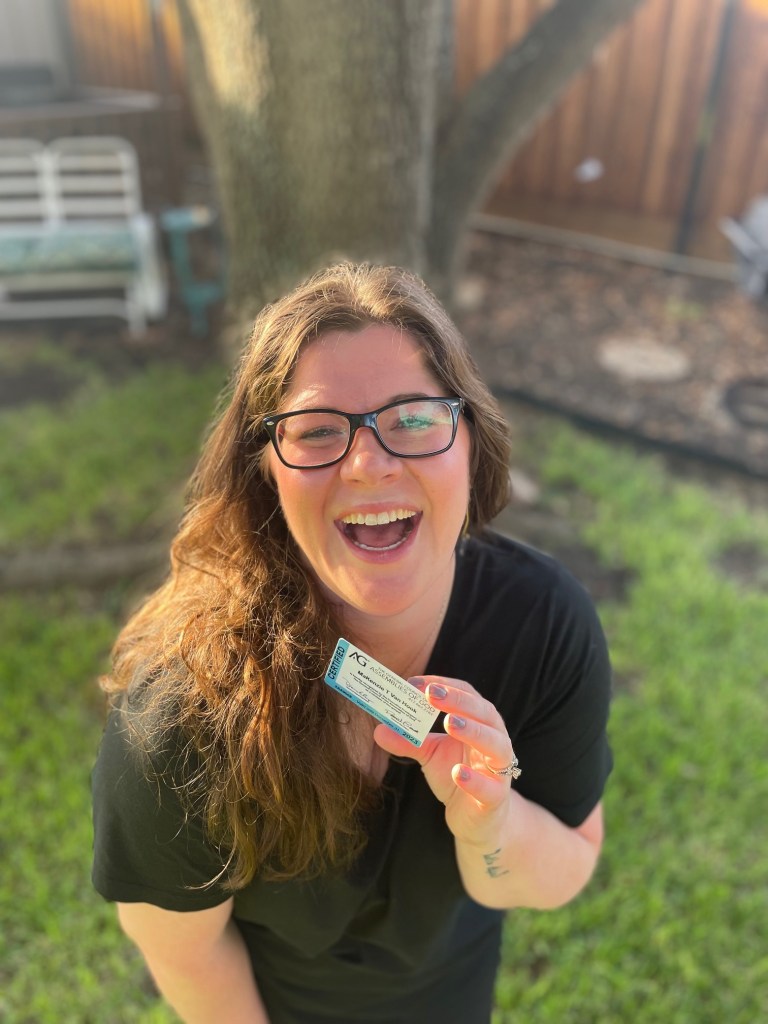
MaKenzie V. is a global worker who has faithfully been serving the unreached in the Arab World while growing her family. Almost every moment of the day is spent chasing Jesus and her toddlers- usually with a cup of hot tea or coffee in hand. She enjoys learning languages, deep belly laughs, and connecting with others where God has them.
-
Freedom From Fear

Photo by Alex P on Pexels.com I have never understood the fascination people seem to have with being scared on purpose. I am not a big fan of haunted houses, horror movies, or roller coasters anymore. When I was younger I participated in my fair share of amusement park rides but as I’ve gotten older it has lost its appeal. I remember my first panic attack when I was 17 years old. I was in the middle of class in high school and suddenly for no reason at all, I felt like I was going to die. It was certainly not an experience that I would ever sign up for voluntarily but yet, I continue to have them occasionally to this day.
Fear has been a frequent opponent throughout my life and I have never once enjoyed it or understood why some people find fear exciting. For years I struggled with feeling like I just wasn’t a good enough Christian or that maybe I wasn’t saved at all if I struggled this much with fear and anxiety. I would return to the altar again and again (and again) begging for forgiveness and saying the sinner’s prayer. I would take captive fearful thoughts and bring them under submission to Christ as 2 Corinthians 10:5 tells us to do and yet I still wept in my bed unable to find sleep.
I realized several things over the years about the fear that I was feeling.
First of all, this fear that God would abandon me if I couldn’t get this right, was not of God. I knew Him! I had studied His word and spent time in His presence. My Father was not looking for a mistake that would signal His release to be rid of me. Romans 8:38-39 says, “I am convinced that nothing can ever separate us from God’s love. Neither death nor life, neither angels nor demons, neither our fears for today nor our worries about tomorrow—not even the powers of hell can separate us from God’s love. No power in the sky above or in the earth below—indeed, nothing in all creation will ever be able to separate us from the love of God that is revealed in Christ Jesus our Lord.”
Second, He had not left me without instruction. He was not waiting on me to be rid of the fear on my own before He wanted me. God walks with me even when I am afraid. He is my peace right in the middle of times when fear tries to overtake me. Psalm 23:4 says, “Even when I walk through the darkest valley, I will not be afraid, for you are close beside me. Your rod and your staff protect and comfort me.” There were times that even in the midst of prayer, my mind and heart were assaulted with unrelenting anxiety and I would speak the Word of God with tears flowing down my face. I felt like I must be doing it wrong if relief was not instantaneous but in truth, this is obedience. This is faith. To continue to speak the Word of God in the darkness knowing that He is with me even when I cannot see Him there. His rod and His staff is protecting me now, even while I wait for Him to answer my prayer.
Finally, through my fear I came to understand God and to trust Him more. There were times in scripture when God healed immediately and that’s the one we all want, but there were others who either did not receive their healing on this side of Heaven or who had a work of obedience to do first. In 2 Kings 5, Elisha sent Naaman to dip seven times in the River Jordan before he received his healing. In John 9, a blind man had to sit still and trust Jesus as he made mud with spit and smeared it on his face.
I have experienced times of fear and anxiety that have sent my brain spiraling down a black hole of “what ifs,” causing my stomach to repel the nutrition that my body needed to function, and at times have racked my body with tremors that made it impossible to do anything but lie down and pray for it to stop. For years, I sought no help except in prayer because I thought it was a test of my faith. The real test of my faith was to trust that God could move in ways that I didn’t expect or understand. For me, God worked through a clinician. Now, I see a faith based counselor and a medical doctor after being diagnosed with CPTSD (Complex Post Traumatic Stress Disorder) and generalized anxiety. I still speak the Word of God over my fear and bring rebellious thoughts under submission to the power of Jesus. I have also found healing in medications that balance the chemistry in my body and therapy that help me to deal with physical reactions to past trauma. And I praise God for every way that He is bringing me healing and freedom from fear.
I John 4:18 says, “Such love has no fear, because perfect love expels all fear. If we are afraid, it is for fear of punishment, and this shows that we have not fully experienced his perfect love.” If you are fearing that you are no longer saved (or maybe never were) because you are fighting a battle with fear then remember, that is not the perfect love of God. He has called us to come to Him as we are and to seek His healing, not to fear punishment from Him. He will never abandon you.
Dearest, you are so loved and it is not the will of God for you to live in fear. Do not fight alone. Reach out to sisters in Christ to fight with you and seek help from a doctor if needed. God is able to give you freedom from fear and will do it in ways you never expected. He is with you and so are we!

Stephanie Sharp is a teacher, a writer, a musician and an ordained minister. She is also a divorced, single mother of 3 teenagers. She writes for the South Texas Women’s Ministries Blog and founded a ministry for ladies walking through divorce and single motherhood called The Well. You can contact Stephanie at thewellwm@gmail.com.
-
Finding Family

Let’s be honest: most of us did not grow up in a house that looked like a Hallmark Christmas movie. (Although, I do have a good friend whose hometown could LITERALLY be the scene of one.)
My husband and I both came from less-than-picture-perfect homes, think more dramatic reality TV than picturesque TV sitcoms. But if there is one thing we have learned and are forever thankful for, it is that God has a beautiful way of providing the family you need, even if it is not the one you were born into.
For us, that family came through our church.
I could go on for days (not joking) about how some of my best friends have become family to me. These are women and men who know my coffee order, have seen my ugly cry, and do not bat an eye when I show up with a brand-new hair color (which is less often now that I’ve shaved my head, but that’s an entirely different blog). They are aunts and uncles to my son, the kind who always ask him about his latest hyper fixation and actually want to hear all the details, and who show up ready with hugs or silly jokes whenever they are needed. Honestly, sometimes I think he prefers them to me.
Coming from backgrounds as children of divorce, single parenthood, and living with family friends, my husband and I didn’t have a shining example of what a family should look like in real life. When there have been issues (and there have been issues) my husband and I have had to learn how to be spouses, how to stay together, and how to parent the children we’ve raised on the fly. So much of that has been shaped by watching the examples of godly marriages and families in our church. These husbands and wives show us daily that marriage is not about perfection, but about grace upon grace and a whole lot of laughter along the way.
When we need advice or have questions, whether it is about parenting, marriage, or the messiness of life, we know we can call or text our church family, and they will be there. They have celebrated with us, prayed over us, cried with us, and supported us in ways that words can hardly capture. God has given us more through our church family than we could ever imagine.
If you grew up in a family that looked more like an episode of COPS than an after-school special, hear me loud and clear: there is nothing wrong or defective about you. You are not missing some crucial chip. God is big enough to be your mother, father, sister, and brother. WHATEVER you need. But He also delights in giving us people who can embody those roles in our lives; a healthy church family that becomes the village you never knew you needed.
As Hebrews 10:25 reminds us, “Let us not forsake the assembling of ourselves together, as is the habit of some, but encouraging one another, and all the more as you see the Day approaching.” God knows we need one another, and He calls us to come together, lift each other up, and walk through this life side by side.
So if you are out there feeling alone or wishing for that sense of connection you have only seen on TV, do not give up. Look for a church that feels like home, not because it is perfect, because newsflash, it will not be, but because the people love Jesus and are willing to love you too.
Because sometimes, the best families are the ones God builds from scratch.
It takes audacious faith to step into a church family. It is vulnerable and scary to open your heart, to risk being seen for who you truly are, and to trust people you do not know yet. It takes bravery to walk into a room full of strangers, to try a small group, or to share your story when your voice is shaking. But that kind of faith, the courage to show up even when you are unsure, is exactly where God does His best work. On the other side of that leap is a love and belonging that will change your life forever. When you take the risk to connect, you will find people who will pray for you, cheer you on, challenge you to grow, and remind you that you are never alone. In the process, you will discover the beautiful truth that the family God gives you can be even more powerful than the one you came from.

Tracie Tevault is a recent addition to the STXWM blog team. Married for 15 years to her best friend, Tracie is raising one awesome son and three spoiled cats. With a heart for ministry, Tracie has served in many areas, but her true passion lies in reaching those who might not fit the traditional church mold. She’s all about showing people they are loved, valued, and created with a purpose.

About STX Women
We are the Women’s Ministries branch of the South Texas Assemblies of God.
Women across South Texas desire a community where we celebrate each other and share each other’s burdens.
Together, we walk out our God-given purpose in our family, church, and community!
Our passion and love for Christ unite us to reach the lost at home and across the world.
Follow Us On:
Subscribe To Our Emails
Enter your email address below to get our new blog posts sent right to your inbox!

